Turning a bag concept into a finished product involves much more than simply producing an item from a drawing. Usually, products are designed around an idea, a concept, or a CAD model. An OEM/ODM bag manufacturer must convert this into a testable, improvable, and repeatable product. The process combines design, engineering, sampling, and manufacturing into one workflow. Careful planning at each stage, from digital files to mass production, is crucial.
Starting with the Design Concept
All projects start with a design brief. Some brands offer CAD drawings, and others offer sketches, reference photos, or written requirements. The manufacturer conducts a design study to understand how it will be used, how much it will hold, its appearance, and how it is built. This initial review is useful to uncover any missing information before development continues.
Reviewing Function and Structure
Once the design is received, engineers test the structure to determine whether it can perform its functions. They take into account the pocket location, strap design, weight distribution, and closure systems. Modifications may be recommended to enhance durability or the concept’s use, but not to alter it. In companies like Everich, this review phase helps take manufacturing requirements into account early in practice.
Choosing Materials
Appearance and performance depend on material choices like fabrics, linings, foam, zippers, and hardware, selected by designer-manufacturer collaboration. Waterproof fabrics, insulation, or airtight zippers are based on the bag’s purpose. These materials define the product’s look and function.
Creating Digital Visualizations
After the specifications are agreed upon, digital models and technical drawings are created. These give designers a visual preview of the final bag product before physical production. The stitching, measurement placement, colors, and branding can be scrutinized. Digital visualization minimizes ambiguity and aids understanding of the final direction.
Building the First Sample
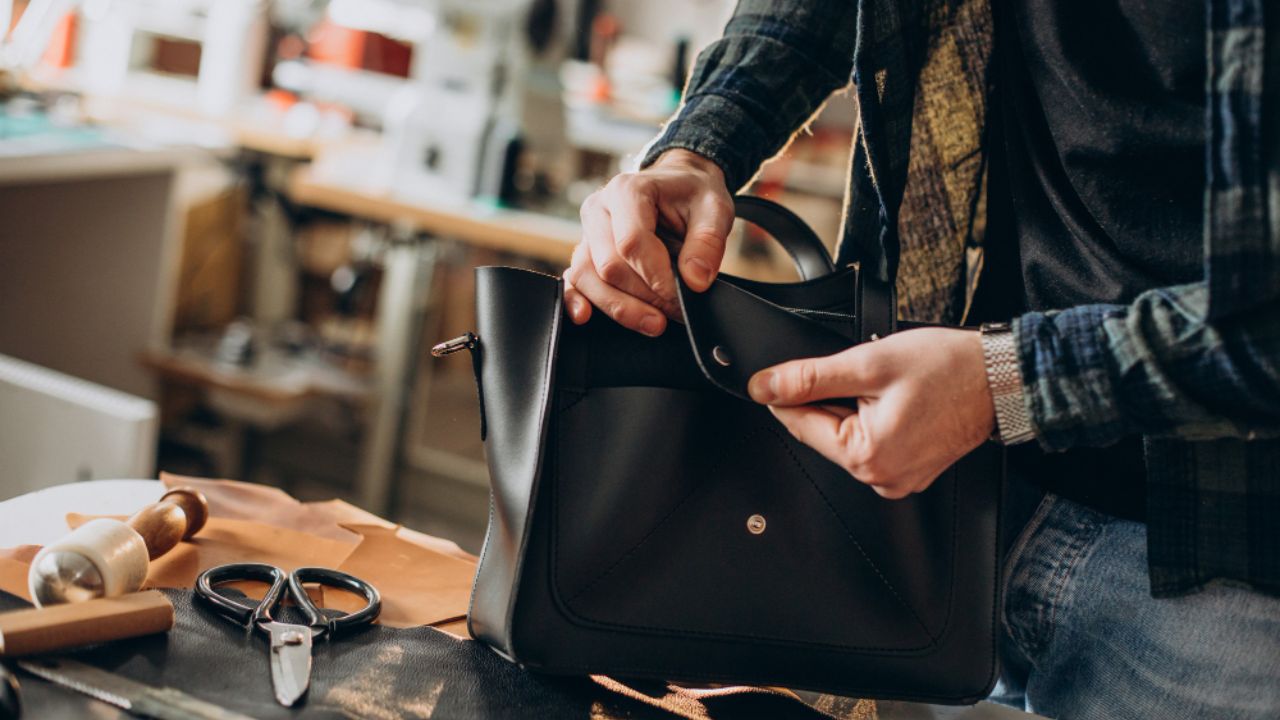
Now it’s time to make a prototype. To create a prototype of the bag, the sample makers employ the approved drawings and materials. This prototype brings the digital idea to life, to be experienced from all angles. It also exposes some information that might not be apparent on a screen.
Testing and Refining
A prototype is not the actual product. Brands will ask for changes after seeing the initial sample. Changes can involve pocket size, handle length, cloth thickness, or logo placement. Several adjustments can be made until the product is satisfactory. In this stage, manufacturers such as Everich collaborate with customers to keep the design consistent and considerate of the practical issues.
Preparing for Production
Once the sample has been approved, the project goes into production planning. Specifications are detailed with documentation ensuring all units meet the same criteria. Material requirements, cutting layouts, sewing instructions, and quality checkpoints are organized. This preparation minimizes the manufacturing risk of inconsistencies.
Managing Manufacturing Across Facilities
There are several bag producers with multiple production facilities to serve various markets and demand. Facilities can be specific to certain materials or product types. For instance, Everich owns bag production lines in both China and Cambodia and can vary its production capacity based on project needs and delivery timelines.
Quality Control During Production
Continuous monitoring is required in mass production. Throughout the manufacturing process, materials, stitching, dimensions, and appearance are examined. Quality checks are conducted not only at the end but also at various stages to detect issues early. This helps keep consistency during large production runs.
Packaging and Delivery Preparation
Once production is finished, the finished bags are ready for shipping. Products are checked again, boxes are prepared according to customer needs, and boxes are arranged for transportation. Good packaging helps the products stay in good condition during transport and when they reach the end-user. A key component of Everich’s workflow is quality verification and shipment preparation prior to delivery to customers.
The Role of OEM and ODM Services
OEM and ODM manufacturing are for different brands. OEM projects are typically based on a customer’s original design, while ODM projects usually start with an existing product idea and are customized. Both methods rely on effective visualization techniques that help translate ideas into manufacturable products. Understanding is essential at all stages of the process between designers and manufacturers.
Conclusion
From a CAD Design to mass production is a series of connected steps, which gradually transform an idea into a finished bag. All design reviews, material selection, digital visualization, prototyping, testing, and quality control are important. Every stage clarifies and minimizes uncertainty prior to manufacture. With a systematic process, OEM/ODM bag manufacturers can accurately understand customer designs and manufacture products consistently from the first sample to the last production run.