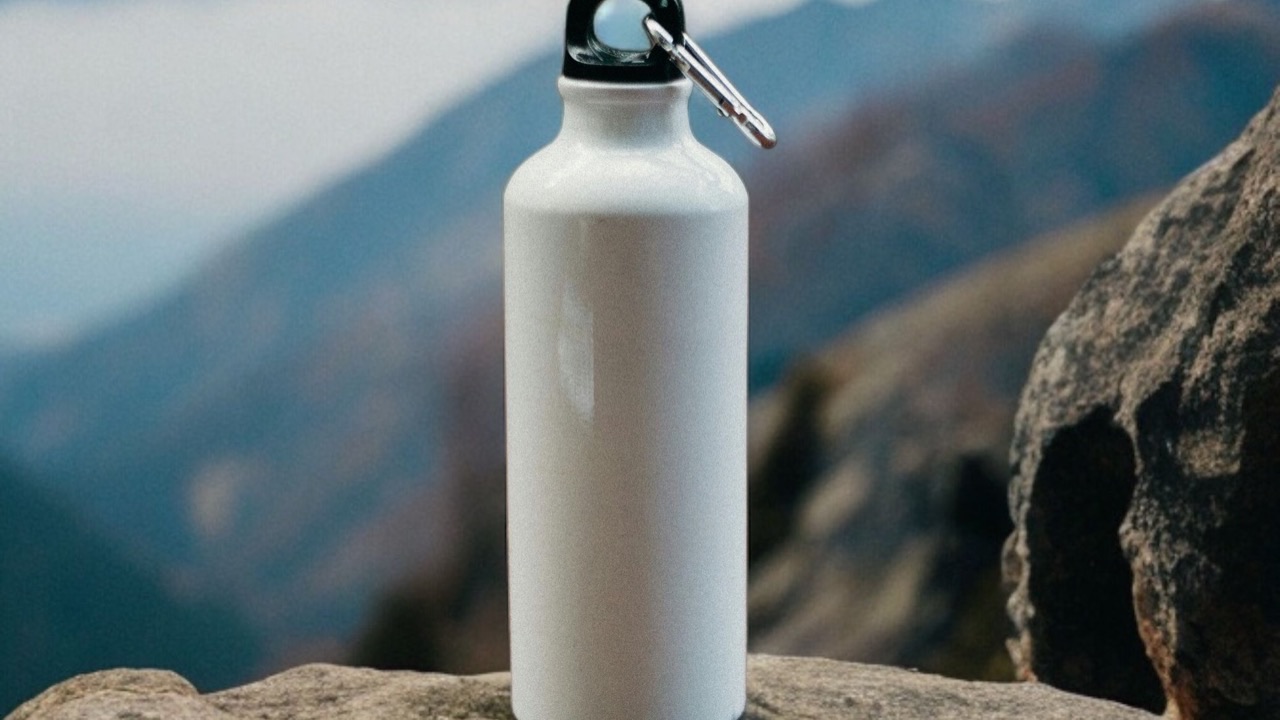
When buyers start specifying a custom water bottle line, the surface finish conversation often gets treated as an aesthetic decision. It’s actually a functional one. The finish determines how the bottle ages through real-world use — dishwasher cycles, bag abrasion, drops, UV exposure, and the general punishment that a daily-carry product takes over months of use. It also determines a significant portion of unit cost, customization flexibility, and what branding options are compatible with it.
Understanding what each finish actually does, and what it costs in both price and durability, makes the design conversation with a manufacturer much more productive.
Powder coating
Powder coating is the most widely used exterior finish in the stainless steel water bottle category, and for good reason. The process involves electrostatically applying a dry powder to the steel surface, then curing it in an oven. The result is a dense, uniform coating that adheres well to the substrate and provides good impact and scratch resistance.
What powder coating does well: color accuracy (any color is achievable with the right compound), even coverage, and durability under moderate use conditions. A properly applied powder coat won’t chip or peel under normal handling. The coating thickness matters — 60–80 microns is the standard range for consumer drinkware; thinner application reduces material cost but also reduces durability.
Where powder coating shows limitations: surface preparation quality has an outsized effect on adhesion. Steel that’s been inadequately cleaned, degreased, or primed before powder coat application will develop adhesion failures that aren’t visible at acceptance but appear within months of use. The pre-treatment process — alkaline cleaning, phosphating, and primer coat — is where shortcuts get taken and where durability problems originate.
Powder coat is also more susceptible to edge chipping than the body surface, particularly at the rim and base where contact with hard surfaces concentrates impact. For products that will see heavy daily use or rough handling, this is worth discussing with the manufacturer.
Matte rubber-touch coating
Matte rubber-touch coating (also called soft-touch or TPU coating) creates a tactile surface that feels distinct from powder coat — warmer, slightly grippy, with a premium feel that shows well in retail. It’s a popular choice for products positioned at the higher end of the mid-market.
The performance trade-off is that matte coatings show oils and fingerprints more readily than powder coat, and the soft surface can pick up scuffs and surface marks over time. Formulation quality varies significantly between coating suppliers — a well-formulated matte coating maintains its appearance with normal cleaning; a poorly formulated one develops a worn look within months.
Matte coatings also require different branding methods. Laser engraving on matte-coated surfaces produces clean contrast but removes the coating in the engraved area, creating a different texture. Screen printing on soft-touch coatings can have adhesion issues if the ink isn’t formulated for the substrate. Test the branding method on the actual production coating, not just the coating category.
Electroplating
Electroplating deposits a thin layer of metal — typically chrome, nickel, or gold — onto the steel surface through an electrochemical process. The result is a metallic finish with a depth and reflectivity that powder coat can’t replicate.
Electroplated finishes are positioned at the premium end of the market and are priced accordingly. The process cost is higher, the material cost is higher, and the quality of outcome is more variable — the thickness and adhesion of the electroplated layer depend on process controls that vary by facility. Thin plating layers develop wear more quickly at contact points; inadequate base preparation leads to blistering.
For buyers targeting premium retail or gifting markets where the visual impact of a metallic finish justifies the unit cost, electroplating is worth specifying. For mid-market products where the cost premium doesn’t translate into proportional margin increase, the economics are harder to justify.
Gradient and specialty finishes
Gradient finishes — color transitions from one tone to another across the bottle surface — have moved from novelty to standard offering at most established stainless steel water bottle manufacturers. The process typically involves multiple spray passes with masking, which adds production time and cost relative to single-color powder coat.
The consistency question with gradients is batch variation — whether the gradient transition point and color saturation match across units in a production run and across reorders. This is harder to control than single-color production and requires clear specification of the gradient position, the transition width, and the acceptable variation range. Without these specs, you’re relying on the factory’s interpretation of the sample, which tends to drift with each production run.
Water transfer printing (also called hydrographics or cubic printing) enables pattern finishes — wood grain, camouflage, abstract patterns — that aren’t achievable with direct spray finishes. The pattern is applied as a film that floats on water; the bottle is dipped through it and the pattern transfers to the surface. Pattern consistency is harder to control than solid finishes because the film distorts slightly with each dip, producing slight variation in pattern placement across units. For buyers where pattern variation has high tolerance, this is a cost-effective way to achieve complex surface patterns.
Matching finish to branding method
The finish and the branding method have to work together, and this decision is worth making at the same time rather than sequentially.
Laser engraving is compatible with all powder-coated and spray-finished surfaces — it removes the coating to expose the steel beneath, creating permanent contrast. On electroplated surfaces, laser engraving removes the plating layer, which can look intentional (polished steel against matte plating) or unintended depending on how it’s executed.
Screen printing adds color to the surface rather than removing material. It’s lower cost than laser engraving but less durable — washing and abrasion degrade screen-printed graphics over time. For promotional products with a shorter expected lifespan, screen printing is often the right choice. For daily-use products intended to look good after a year of use, laser engraving or debossed branding holds up better.
UV printing can produce detailed multi-color graphics and is more durable than standard screen printing, but adds cost. It works best on flat or slightly curved surfaces; highly curved or tapered bottle profiles present adhesion challenges.
The decision logic
Choosing a surface finish is easier when you start from the product’s expected use environment rather than the aesthetics. A bottle designed for outdoor and active use needs a finish that handles drops and abrasion — powder coat with proper pre-treatment. A bottle positioned as a premium gift needs to look the part at point of purchase and continue looking good after months of use — electroplating or high-quality matte coat. A promotional merchandise bottle needs to carry branding clearly and cost-effectively — single-color powder coat with screen printing or laser engraving.
Working through the finish decision before sampling means the first sample is actually close to the intended product, rather than a generic starting point that requires multiple revision rounds to reach the correct surface specification. That compression of the development cycle tends to matter more than buyers expect when timelines are involved.